Botanical Garden, Ooty

Sprawling across 55 acres on the lower terraces of Doddabetta Peak, the Government Botanical Garden sits at 2,250 metres above sea level and counts among South India’s best-known botanical institutions. More than 1,000 plant species grow here, from old giant trees to glasshouse orchids. The Tamil Nadu Department of Horticulture runs the place, and it works as a plant conservation site, a heritage landmark and a public park all at once.

Stone statue, colourful flower beds and red colonial-style buildings at Ooty Botanical Garden

How the Garden Began

The project dates to 1848, when the Marquis of Tweeddale, then Governor of Madras, wanted a space for horticultural research and for trialling new crops. William Graham McIvor, a curator sent over from the Royal Botanic Gardens at Kew, took charge of the design.

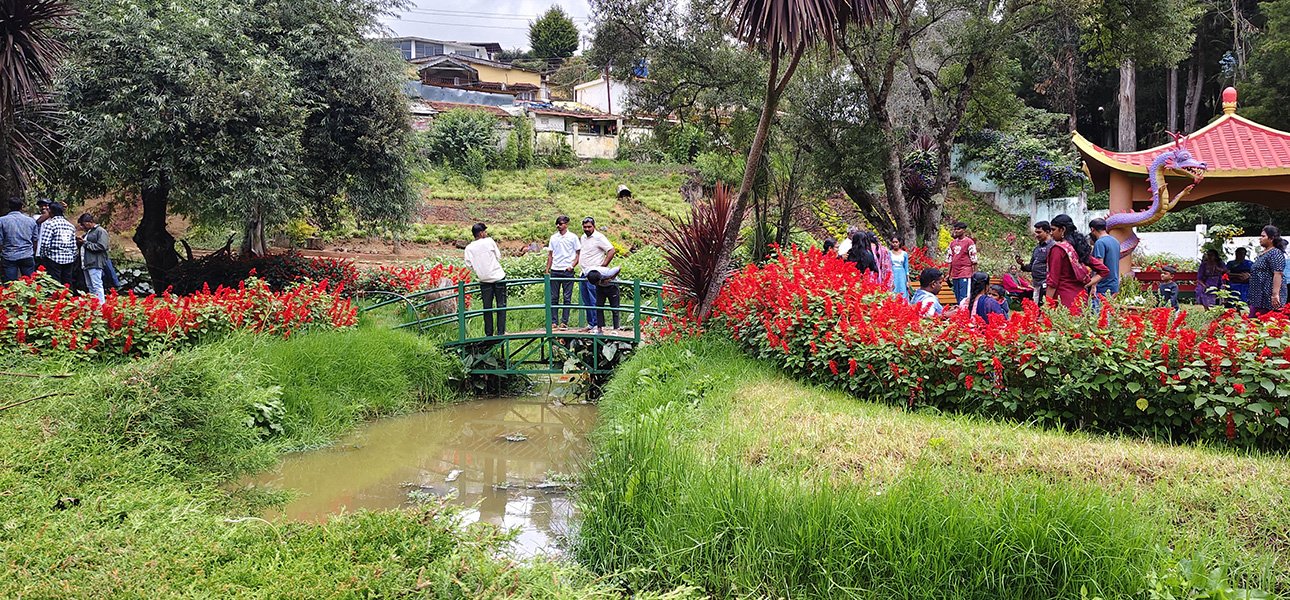
Visitors standing on a small green bridge surrounded by red flower beds and greenery at Ooty Botanical Garden
  • 1848: Layout planned; McIvor arrives from Kew.
  • 1858: Construction finished on former forest slopes and swampy lowland.
  • 1980: Tamil Nadu Horticulture Department takes over the annual Flower Show.
  • 1992: Arboretum for native species established.

McIvor spent roughly ten years on the work. Marshy ground was drained and reclaimed, and the hillside was cut into terraced lawns, winding paths and symmetrical flowerbeds. The result follows classic English landscape gardening, adapted to the contours of the Nilgiri hills.

Watch: Exploring the Colors of Government Botanical Garden

The Six Zones

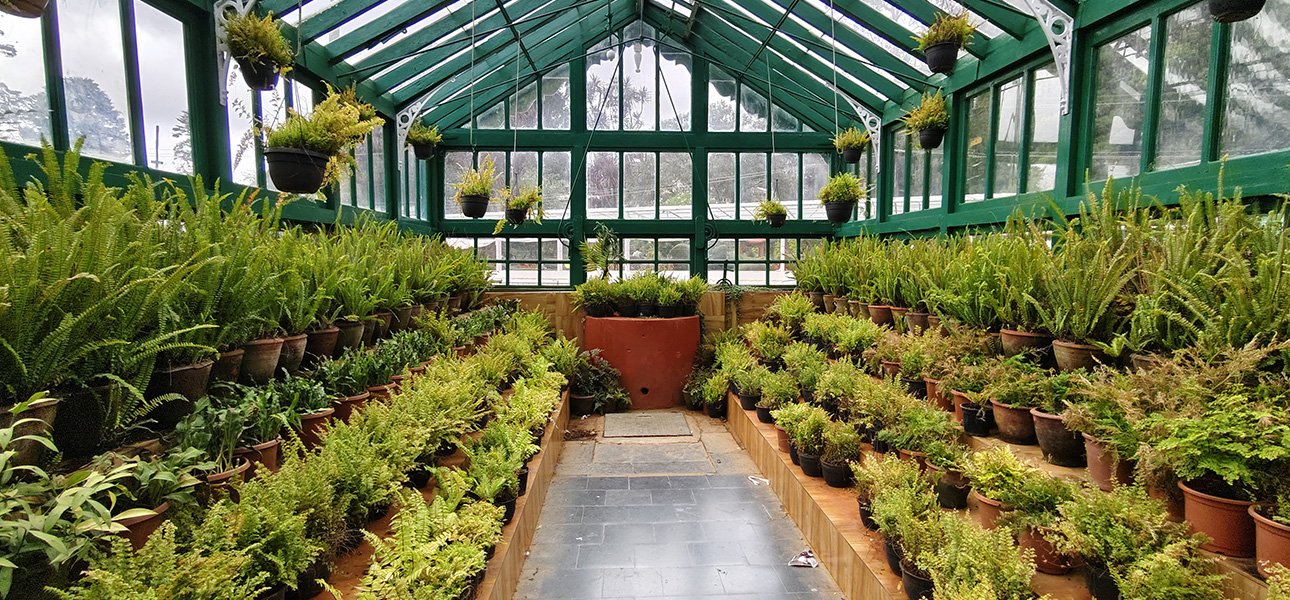
Rows of potted ferns and green plants inside the glass greenhouse at Ooty Botanical Garden

Lower Garden

Broad lawns, the entrance gate, carpet beds shaped like national emblems, and tall specimen trees.

New Garden

A rose garden with over 300 varieties, including Hybrid Tea, Floribunda and Polyantha.

Italian Garden

Symmetrical beds, octagonal lily ponds and bright perennial displays.

Conservatory and Glasshouses

Climate-controlled structures holding orchids, tuberous begonias, ferns, cacti and succulents.

Nurseries

Greenhouses for propagation, seed raising and preparing potted exhibits.

Arboretum

A 1.58-hectare woodland patch protecting native Nilgiri forest trees.

Notable Collections

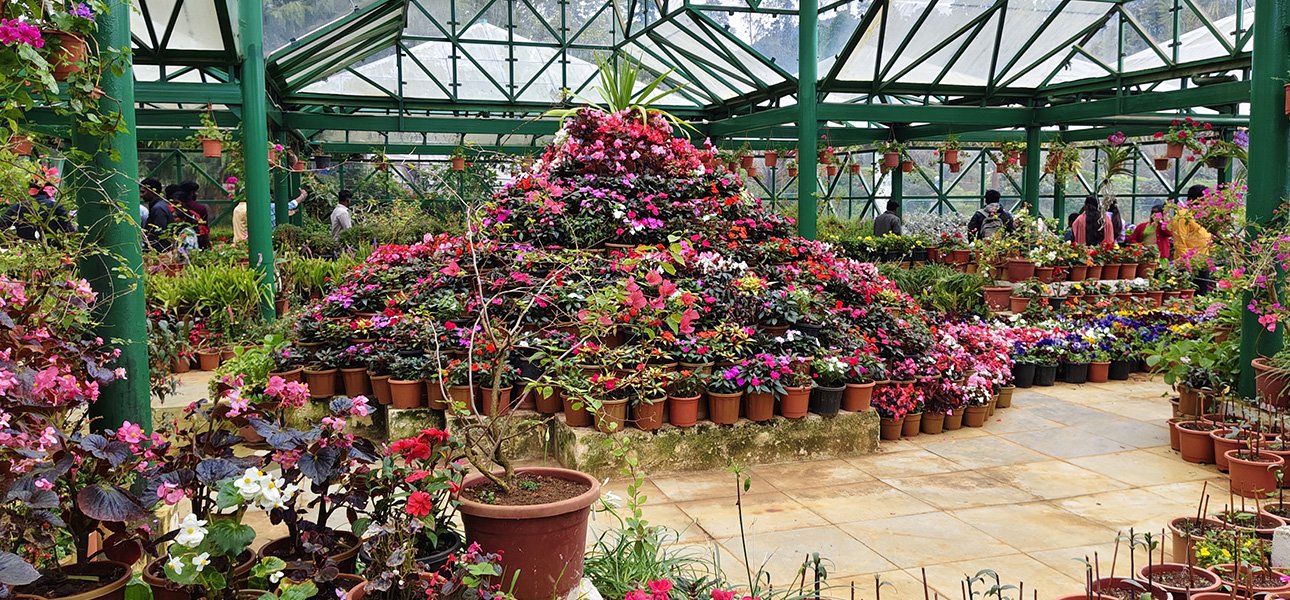
Colourful pink and white flowering plants arranged in pots inside the greenhouse at Ooty Botanical Garden

The 20-Million-Year-Old Fossil

A petrified tree trunk rests near the middle of the garden. It came from the National Fossil Park at Tiruvakkarai and was gifted by the Geological Survey of India. Silica slowly replaced the wood over millions of years, leaving stone in the shape of a tree.

Exotic Trees

Many conifers and broadleaf species arrived in the 19th century from abroad. Among them are:

  • Monkey Puzzle (Araucaria bidwillii)
  • Paper Bark (Melaleuca quinquenervia)
  • Cork Tree (Phellodendron)
  • Pencil Cedar (Cedrus deodara)
  • Weeping Willow (Salix babylonica)

Fern House and Orchidarium

Humid, shaded glasshouses shelter over 30 fern species along with both epiphytic and terrestrial orchids. Maidenhair ferns and colourful begonia cultivars stand out.

Medicinal Plant Garden

One section is given over to herbs used in Ayurvedic and Siddha medicine, with signboards that explain what each plant is used for.

Indigenous Nilgiri Flora

Native Shola trees, orchids and ferns round out the local collection.

The Ooty Flower Show

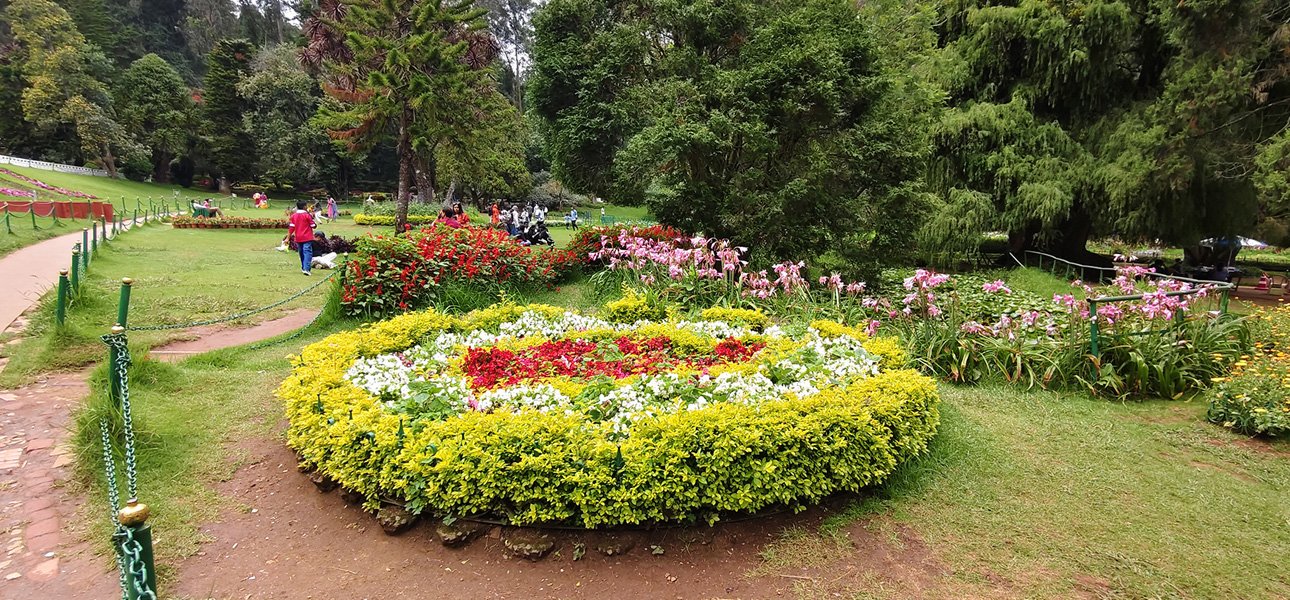
Circular flower bed with colourful flowers and neatly trimmed hedges at Ooty Botanical Garden

Every May, the garden hosts the Flower Show, the main event on India’s horticulture calendar. The Nilgiris Flower and Fruit Show Committee organises it over several days. Floral sculptures, cut-flower contests, vertical displays and plant exhibitions fill the grounds, and more than 50,000 potted arrangements of tulips, dahlias, salvia, delphiniums and petunias line the central lawns. Attendance tops 150,000 each year.

Planning a Visit

Timings: 7:00 AM to 6:30 PM, every day including public holidays.

Main entrance arch of Ooty Botanical Garden with ticket counters and visitor walkway

Entry Tickets

  • Adults: ₹50
  • Children under 10: ₹30
  • Still Camera: ₹50
  • Video Camera: ₹100
  • Phone Cameras: Free

Prices may change when the state revises them.

Best Months to Visit

  • March to June: Brings peak blooms and the Flower Show.
  • September to November: Offers clear skies, cool air, fresh greenery and thinner crowds.

Getting There

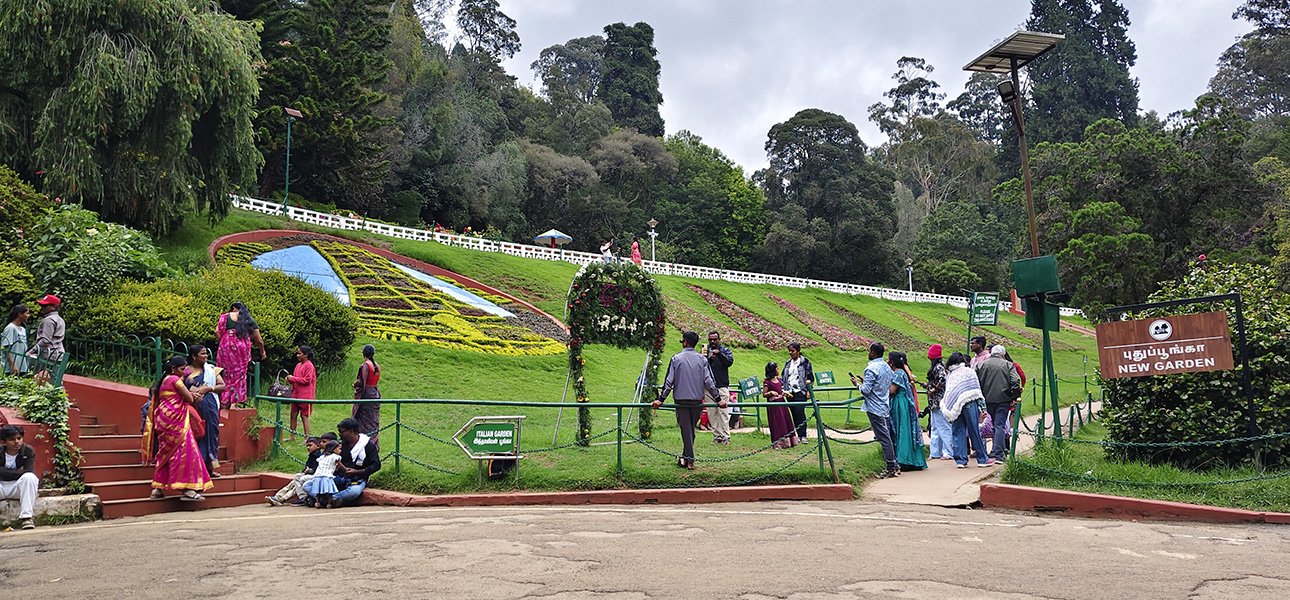
Sloping flower garden with colourful floral patterns, green lawns and visitors

The garden stands on Cotton Hill Road in Vannarapettai, about 2.5 km from Ooty Bus Stand and Udhagamandalam Railway Station.

  • Rail: The Nilgiri Mountain Railway links Mettupalayam with Ooty.
  • Road: NH 181 connects Ooty to Coimbatore (85 km) and Mysore (125 km).
  • Local Transport: Autos, cabs and local buses stop at the front gate.

Frequently Asked Questions

How Long Does a Full Walk-Through Take?

Between 1.5 and 3 hours covers all six sections, the conservatories, the arboretum and the fern houses at an easy pace.

Is Food Allowed Inside?

Packed meals from outside are generally not permitted, to keep the lawns clean. Snack counters and tea stalls near the main gate sell Nilgiri tea, light bites and drinks.

Is the Garden Suitable for Elderly Visitors or Those with Limited Mobility?

The lower lawns have wide paved paths that suit gentle strolls. The upper parts, including the terraced Italian Garden and the Arboretum, involve steep climbs and steps because of the slope.

Is There Any Tribal Heritage on Site?

Yes. At the highest point of the grounds stands the Toda Mund, a traditional Toda settlement. Barrel-vaulted huts and the architecture of the Nilgiri Toda community are on display, offering a look at their way of life.

Cottage Stays Near Botanical Garden

Curved staircase surrounded by lush green plants and a flower-decorated arch

The Government Botanical Garden lies on the lower slope of Doddabetta Peak and covers 55 acres of lawns and rare plants. It also holds a fossilised tree trunk said to be about 20 million years old. Birds are active in the early hours, and an early start means a quiet walk before the tourists arrive. Cottages in this area are green and calm, and central Ooty is within walking distance.

Government Botanical Garden – Location and Directions