Doddabetta Peak, Ooty

Doddabetta rises 2,637 metres (8,652 feet) above sea level, making it the tallest peak in the Nilgiri Hills of Tamil Nadu. The Nilgiris sit where the Western and Eastern Ghats meet, and from the top the land falls away into valleys that stay wrapped in mist for much of the year. The peak lies about 9 kilometres from Ooty town on the Ooty-Kotagiri Road. Visitors come for the views, and the forest around it matters just as much to botanists and wildlife watchers.

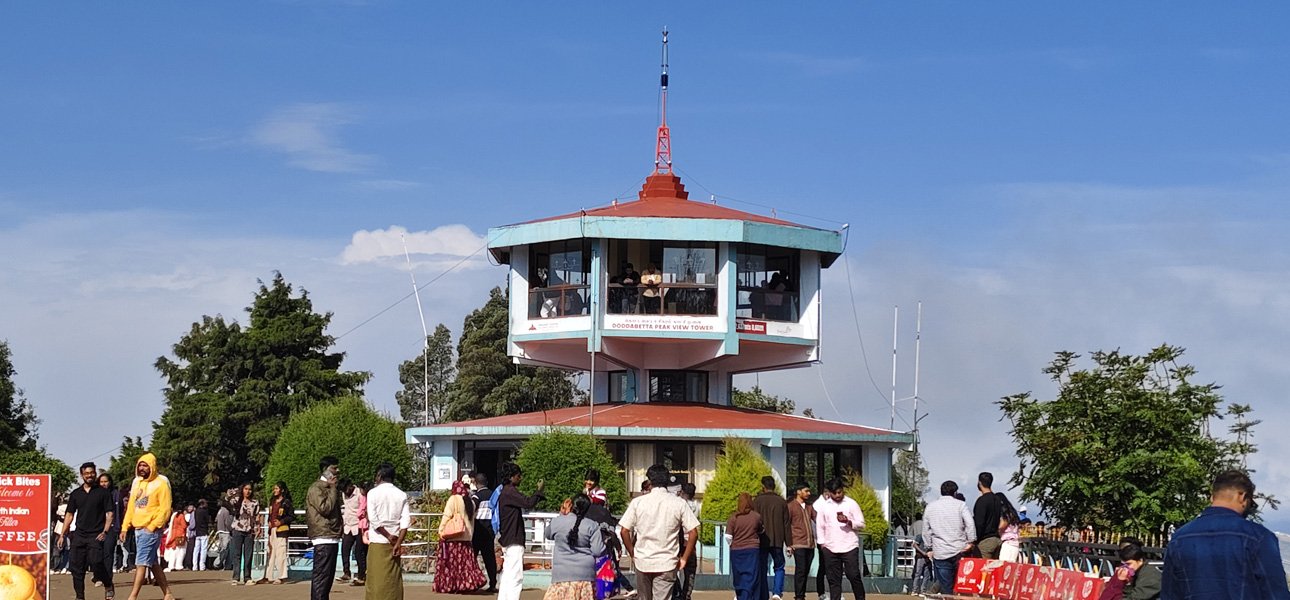
Doddabetta Peak view tower with visitors standing near the observation building

Why Does the Peak Matter?

The name means “Big Mountain” in Badaga, the local language. It ranks among the tallest summits in South India, in the company of Anamudi, Meesapulimala and Kolukkumalai. The hill is built on charnockite, an ancient rock found across the Nilgiri massif. At this height, patches of stunted forest called sholas sit among open grassland, and the mix is unique to these hills.

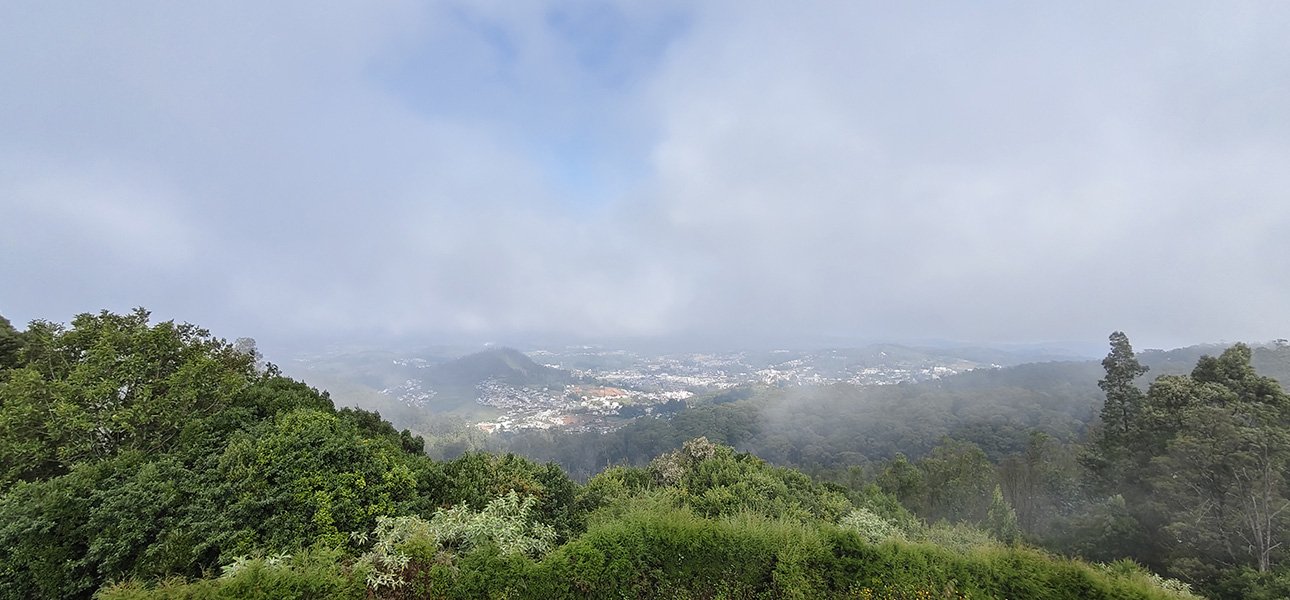
Panoramic view of green forest-covered hills and Ooty town from Doddabetta Peak
  • Elevation: 2,637 m (8,652 ft)
  • Range: Nilgiri Hills, Western Ghats
  • District: The Nilgiris, Tamil Nadu
  • Nearest town: Udhagamandalam (Ooty), 9 km
  • Main vegetation: Shola forest and pine

The reserve forest on the slopes collects water that runs into mountain streams and then into Emerald, Avalanche and Ooty Lakes. Temperatures stay far below those of the Tamil Nadu plains. That chill suits lichens, mosses and rhododendrons.

Video Guide: What to Expect at Doddabetta Peak

What Is There to See?

The Tamil Nadu Tourism Development Corporation and the State Forest Department look after the summit area.
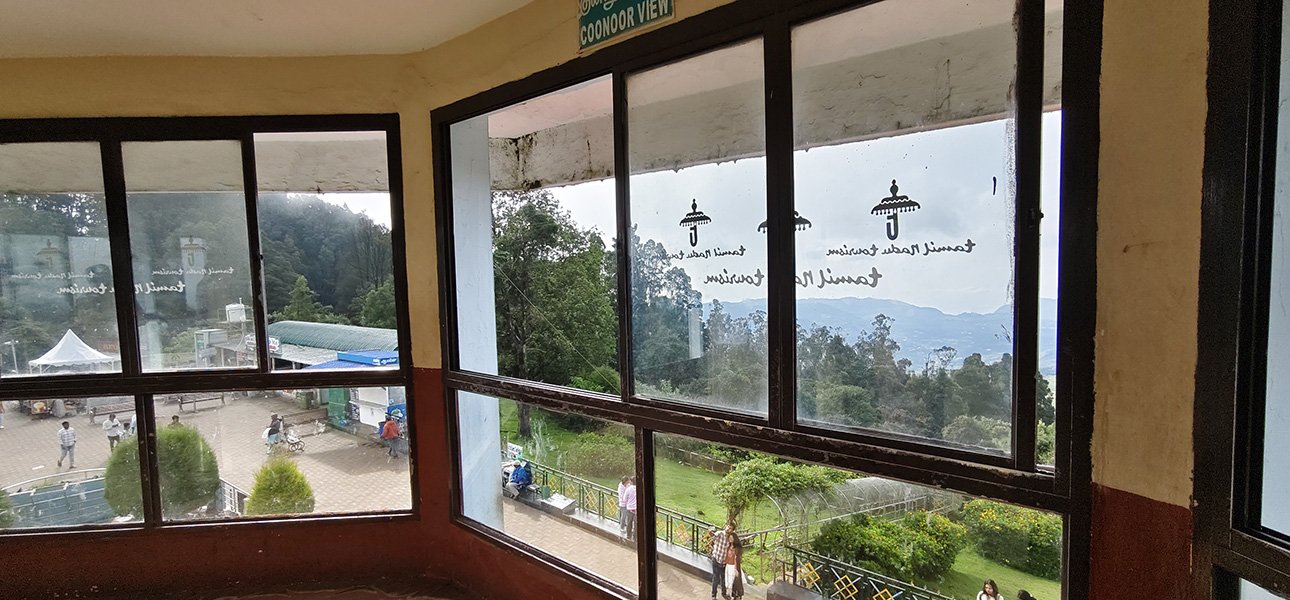
View of green hills and landscaped gardens through glass windows at Doddabetta Peak

Telescope House

This observation tower is the main draw. Its two telescopes bring distant scenery close: Ooty town and the terraced fields around it, the forest canopy of Mudumalai National Park, the plains near Coimbatore, the ridges of Bandipur, and on very clear days the Chamundi Hills near Mysore.

Medicinal Plant Garden

On the way up, a garden extension shows native Nilgiri plants. Eucalyptus, cinchona (the source of quinine) and wild tea shrubs grow beside high-altitude natives.

Viewpoints and Walkways

Paved paths circle the summit past lawns and flower beds. Dahlias and marigolds bloom in season, along with a few native orchids. Stone parapets with benches make good spots for watching sunrise or sunset.

Plants and Animals

The forest around Doddabetta falls within the Nilgiri Biosphere Reserve, the first biosphere reserve designated by UNESCO in India. Life here has adapted to damp air and sharp swings in temperature.

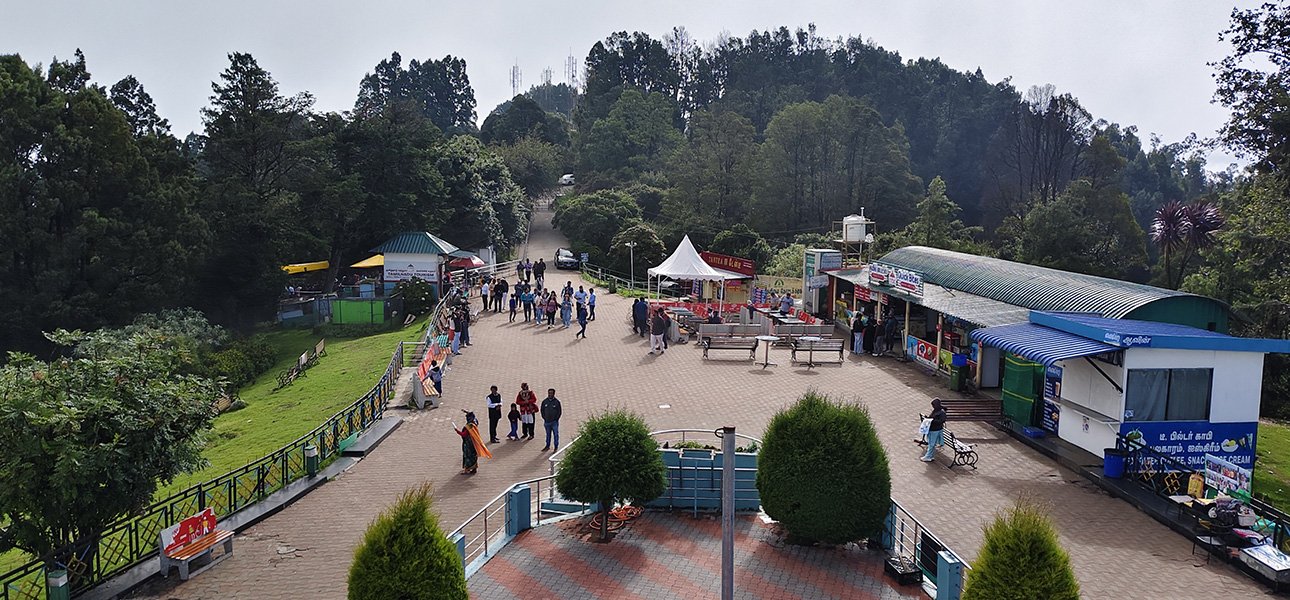
Visitor area with small shops, walking paths and forest views at Doddabetta Peak

Plants

  • Nilgiri rhododendron (Rhododendron arboreum nilagiricum), with red flowers from January to April.
  • Neelakurinji (Strobilanthes kunthiana), a shrub that flowers once every twelve years and turns whole slopes violet-blue.
  • Eucalyptus and pine, brought in during British rule and now growing in dense stands.
  • Shola trees, short hardwoods draped in orchids, ferns and moss.

Animals

  • Nilgiri tahr, an endangered mountain goat found only on the high crags of the Western Ghats.
  • Nilgiri langur, black-furred with a golden-brown mane, often seen in the upper canopy.
  • Barking deer, which feed on the lower slopes in early morning.
  • Birds such as the Nilgiri flycatcher, Nilgiri pipit and Nilgiri wood pigeon.

Best Time to Go

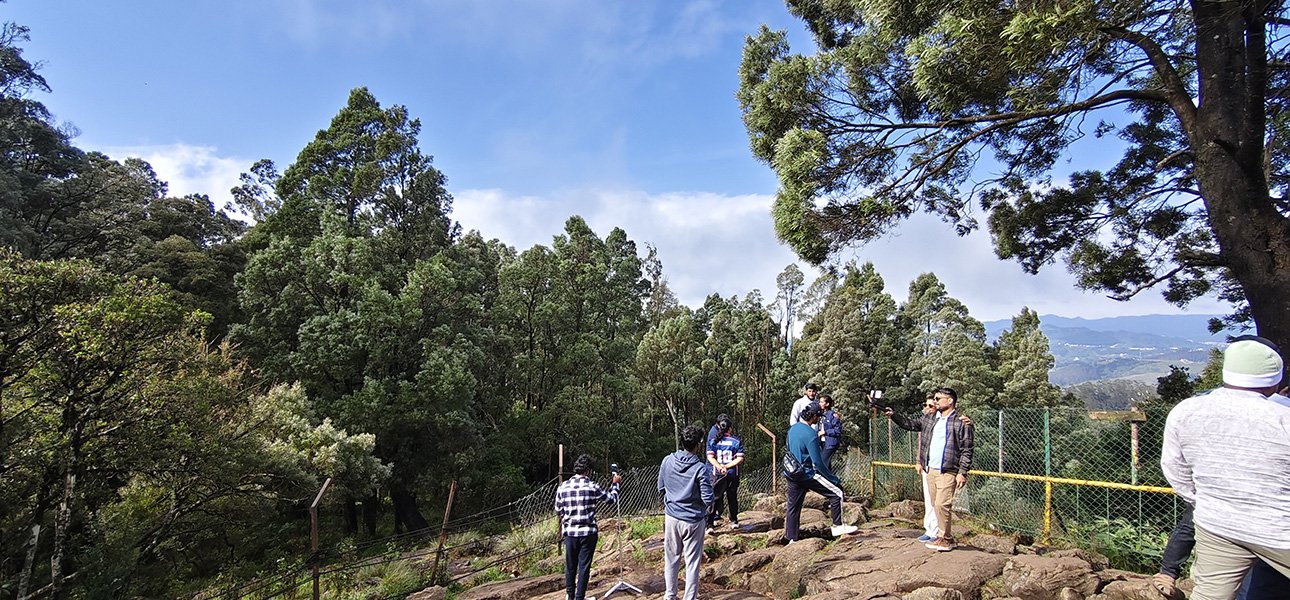
Visitors enjoying the forest and mountain views from a rocky viewpoint at Doddabetta Peak
  • Post-monsoon and winter (October to February)
    • Conditions: Clear skies and cool, dry air.
  • Summer (March to May)
    • Conditions: Mild weather and large crowds.
  • South-West Monsoon (June to September)
    • Conditions: Heavy rain and poor visibility.

October to February gives the sharpest views. December and January mornings can drop to between 0°C and 5°C, and the clear air is good for photography from the Telescope House.

March to May is the busiest stretch, with school holidays and local festivals. Temperatures sit between 15°C and 22°C, though fog sometimes drifts in by mid-afternoon.

June to September brings heavy rain and thick fog that can cut visibility to a few metres. Strong winds and the odd landslide sometimes close forest roads for a while.

Getting There

Doddabetta is a short drive from Ooty. The route runs from the Ooty bus stand or railway station along the Kotagiri Road to Doddabetta Junction, then up a winding 3-kilometre road to the summit parking area.

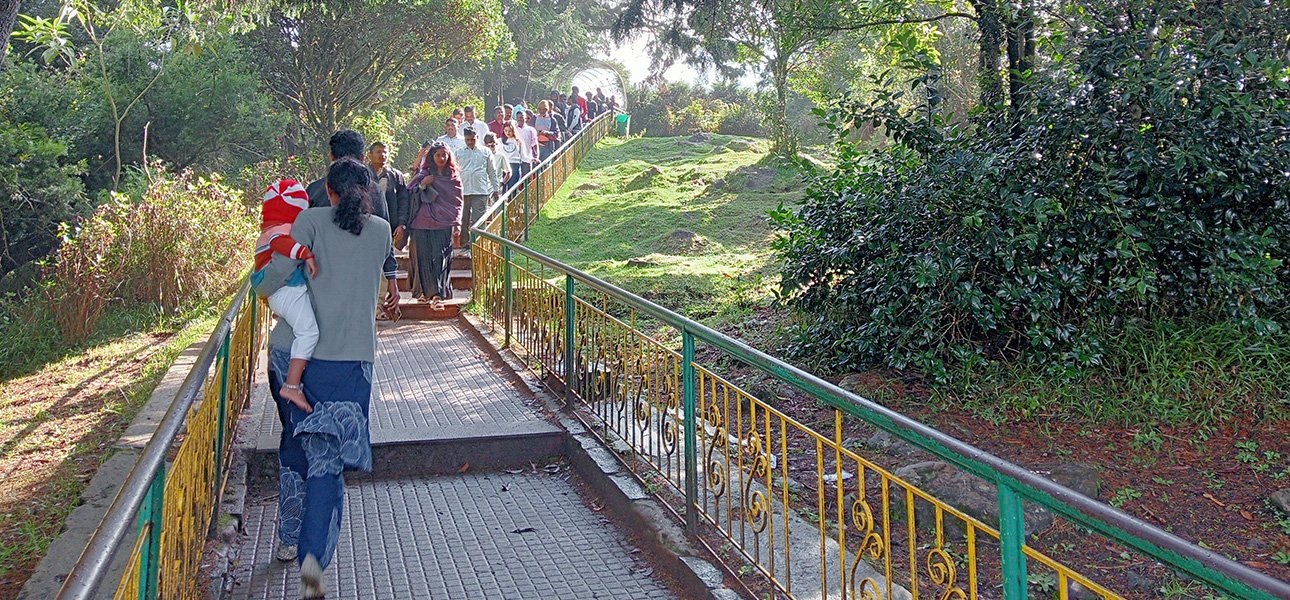
Visitors walking along a metal-railed pathway surrounded by greenery at Doddabetta Peak
  • Taxi or auto-rickshaw: Both run from the Ooty Central Bus Stand and Commercial Road and will do a round trip.
  • Bus: TNSTC buses on the Ooty-Kotagiri route stop at the junction. From there the peak entrance is a 3-kilometre uphill walk or a short shuttle van ride.
  • Own vehicle: Cars and two-wheelers can use the paved road to the top. Parking is near the market complex at the summit.

The nearest railway station is Udhagamandalam, 9 kilometres away, which is the terminus of the Nilgiri Mountain Railway, a UNESCO World Heritage line. The nearest airport is Coimbatore International (CJB), roughly 95 kilometres off.

Timings, Fees and Rules

Opening Hours: 9:00 AM to 6:30 PM daily. Arriving between 9:00 and 10:30 AM avoids the midday rush and the cloud that tends to settle in the afternoon.

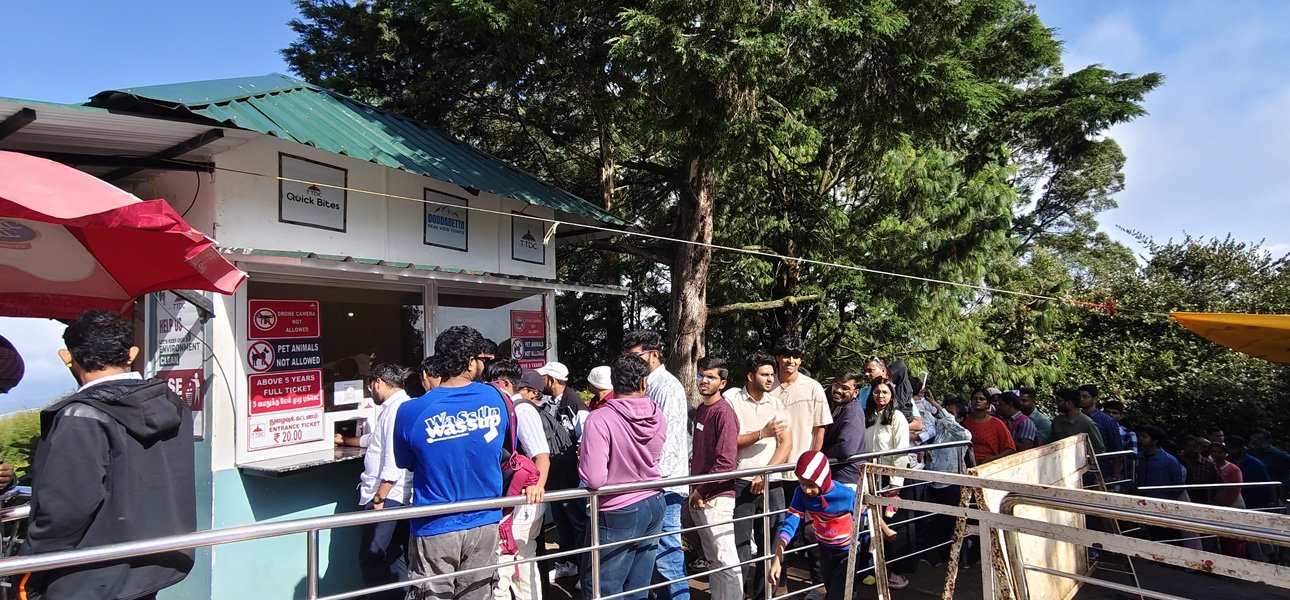
Visitors queuing at the entrance ticket counter at Doddabetta Peak

Entry Fees

  • Adults: ₹20
  • Above 5 years: ₹20
  • Parking: Varies by vehicle type

Rates change from time to time, so a quick check with the tourism office or at the gate is wise.

Rules

  • Single-use plastic bottles and bags are banned at the peak, so reusable bottles are the way to go.
  • Waste goes into the segregation bins at the commercial plaza.
  • Drones need written permission from the District Collectorate and the Forest Department.

Practical Tips

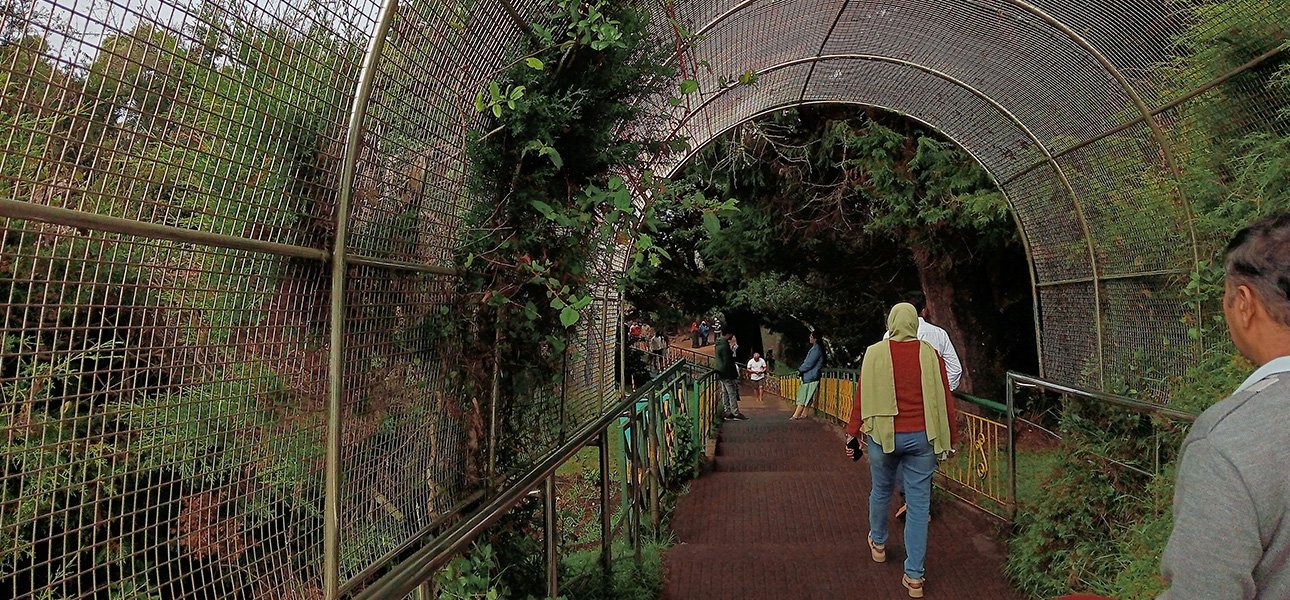
Visitors walking through a curved metal mesh tunnel surrounded by trees at Doddabetta Peak
  • Dress in layers. Weather can turn quickly above 2,600 metres, and a light woollen or windproof jacket helps even in summer.
  • Wear shoes with grip. Paved ramps get slick in fog or light rain.
  • Go in the morning. Moist air often turns to dense fog after 2:00 PM, which spoils the view from the Telescope House.
  • Browse the stalls. Shops along the parking area sell eucalyptus oil, homemade chocolates, winter spices and fresh tea leaves from nearby estates.

Cottage stays near Doddabetta

Doddabetta is the highest peak in the Nilgiris, at more than 2,600 meters. Cottages along the ridge face sunrise, misty valleys, and the surrounding blue hills, and hiking trails begin close by. The telescope house at the summit is best visited at dawn, when the view is at its clearest and the cloud often lies below.

Doddabetta Peak Ooty – Location and Directions